Wednesday, October 24, 2007

The Fire This Time

The Golden State would be better named were it called the Action & Adventure State. Californians know how the ecological cycle goes. Just like our rootin' tootin' forbears, we're ready for a little danger. We all know that the state quakes and mudslides and droughts and burns. We all recognize that, despite all of this, the state refuses to fall into the ocean. We live there anyway. The natural ecology demands that the landscape undergo drastic natural overhauls. It ain't all botox and movie stars. No, Californians grow up (if they're even really from the state to begin with. Most aren't.) knowing how to run from danger in the form of natural occurrences. For example:

Earthquake: turn off the gas main, run outside, hide under a table/in doorway, rebuild.

Mudslide: purchase good insurance, run for your life, rebuild.

Drought: conserve water, flush toilet periodically (yellow= mellow/brown= flush it down), deal with it.

Fire: pack it up and run for your life.

Here's some coverage of the latest just in case you haven't heard what is going on in California:


What the latest wildfires bring into sharp focus is our great Nation's readiness to deal with natural disasters. One wonders how those now million or so displaced by the latest burn will fare as compared to Katrina's victims. Perhaps there are some characteristics that render them better able to deal with nature's whims and cycles. To begin with they all know that the state is a tinderbox. Fire insurance is not optional. Firefighters go to college and learn fire science. Smokey the Bear works overtime. But, the 9th ward knew too that they were doomed in the event of a hurricane. They knew that hurricanes happened in their region. So, how are they different from the latest victims of disaster?

I realize that I'm perhaps a step or two ahead of things. Many people are displaced and suffering hardship. Not all fire victims are the same. Is it possible to make generalizations about a situation that has yet to be deemed under control? Perhaps not. Of course, there's always recent history. While the police are busy gunning down suspected arsonists, I'd like to ask how these events reflect on our country?

First, a look at who lives where. If you're not from the region effected by the disaster in question it matters not who actually lives in the locations being highlighted but, rather, who is being represented as victims of the catastrophe. Check out this slide show from the NY Times, click here. You'll notice a few points of contrast in comparison to Katrina coverage. There don't seem to be many people in the photos. In fact most of the coverage depicts really big houses being burned to the ground, click here. Then there are scenes that often come to mind when California is being talked about (surf, sun, Malibu) but with smoke and people in fire gear. Wait, in the second slide show, forget the lone photo of an Indian Reservation burning, look people! But what is the difference between them and the people we saw in Katrina photos...I'll give you two guesses...okay, fine click here.

Califronia officials are saying that they've learned from Katrina. Photos of shelters look much less chaotic. The elderly were evacuated efficiently. While deaths have occurred, they are not in the desperate numbers seen in Katrina's wake. Help is not only on the way but present; the fire squads have been called in and are working diligently. Is this really a case of lessons learned or are race and class issues playing out just as predicted? When the victims are rich and white (or at least represented that way) tragedy is occurring. If the victims are poor and or of color...well, who hasn't YouTubed the Kanye West quote? If you haven't here's a more eloquent version of the outrage:


And so, I'll be watching and waiting to see what will happen. Will race and class influence the response to tragedy or won't they? We shall see.

Sunday, October 21, 2007

The People's Country Club


South Carolina stands out among the states. It is and has been exceptional throughout its history. The state where secession began and the place where the "stars & bars" (Confederate Battle Flag) could be seen until far too recent history flying above its Columbia, SC, capital building. Yes, the Palmetto State sticks out in an American historian's mind.

But, just as in the past, the black population of the state weighs heavily on the minds of American politicians. Obama and Clinton are both trying to romance the African American vote in South Carolina. National Election aside, black voters have the important vote in the Democratic Primaries that loom in the near future. I was reminded of this while clicking through my electronic version of the New York Times this morning. In it a reporter wrote and videotaped a feature on the "Beauty Shop Vote".

What the feature presents is a case that may seem shocking to most Americans, especially the reading audience of the NY Times. Unlike elsewhere in the country, the African American vote matters in South Carolina, at least in the Democratic Primary. Blacks make up around 30% of South Carolina's population. This is far from the antebellum demographics that made blacks a majority in the state and turned state level politics upside down during Reconstruction by electing a majority black state congress.

But now, how are these women, those credited as holding the "Beauty Shop Vote" in the balance, viewed. For that matter what legacy of South Carolina's black political past remains? The scene opens in a beauty parlor where women sit conversing with a white reporter from and, at times, a white female representative for Obama's campaign. The reporter is surprised to find out that beauty parlors are places of political action. The reporter seems even more stumped when the clientèle is less than eager to express definite political opinions to her. No one makes any commitments to vote either for Clinton or Obama. Most striking of all to the reporter is the frequent fear and concern expressed for Obama's safety. Some women, while reserved when expressing political opinions, readily express worry that Obama will be assassinated.

The legacy of violence is one that haunts the series of interviews. Considering that Obama was given a secret service detail earlier than any candidate other than Clinton who's protection carries over from her days as First Lady, this concern is anything but misplaced. One wonder's how much public concern is expressed for the life of our current president, who remains in low esteem for the majority of Americans. No one has talked of assassination attempts in his regard. In the case of Obama, "they" remain a threat. Who are "they"? The government, terrorists, racists, or some of each? One thing was for sure, the women in South Carolina poised at the intersection of race, class, and gender with the ability to decide and influence a candidacy, think Obama should watch himself.

As the election approaches and the public begins to wonder just what the Bush Administration can come up with in its last few days in office, all eyes focus on the Democrats. This is their election to loose. Who will it be: a woman or a black man? That is, after all, how the candidates are viewed. The "Beauty Shop Vote" would like to consider more though. They're more sophisticated than that. They don't want to be given the choice of a black man or a woman. No, they want to weigh the stances and merits of candidates. All of this as the result of and in spite of South Carolina's sorted political past. And why should they care if a New York reporter suddenly wants to hear what they have to say? If anyone knows, they do, that politics are trifling at best and reality is here to stay. And so with polite statements like "I'll have to pray on it" and "I hope the Lord takes care of whoever is elected" and "you never know", the women dismiss the politicians with a smile. This is the first example of self respect and poise I've seen in this election.

Photo taken from the NY Times article. For the NY Times video: click here.

Thursday, October 18, 2007

Word

word (wurd) –noun
1.
a unit of language, consisting of one or more spoken sounds or their written representation, that functions as a principal carrier of meaning. Words are composed of one or more morphemes and are either the smallest units susceptible of independent use or consist of two or three such units combined under certain linking conditions, as with the loss of primary accent that distinguishes blackʹbirdʹ from blackʹ birdʹ. Words are usually separated by spaces in writing, and are distinguished phonologically, as by accent, in many languages.

Don't worry, Dear Reader, I've not devolved into the deft stylings of an undergraduate term paper. No, I'm serious about this. In fact I'll even add a slang definition:

word (wurd)- noun

1. An Africa American colloquialism that expresses agreement.

2. An exclamation that denotes that the truth is being spoken.


Today I want to talk about words in the spirit of this Daily Show segment:


Y
ou see, what Oliver is talking about isn't anything new at all. In fact, changing words has been the business of government for a long time. In the case of the U.S. government, well, it is serious business. Since I promised you some history on this blog, let's take a look back.

Case #1:
Andrew Jackson- the guy on the twenty dollar bill, father of modern democracy, and inventor of American politics. That's right Old Hickory gave us the gift of universal suffrage. Okay, universal white male suffrage. He marched his Tennessee Volunteers off to do battle against forces that threatened America's security in the Creek War. He defended the U.S. against the evil British in the War of 1812. He occupied the White House despite various ailments and injuries as a true Scotch Irishmen.

His contribution to defining our term: Indian Removal = National Security. Did I mention that he's the guy that was responsible for the Trail of Tears? The logic: Indians didn't like Americans for some reason. They could very well side with the French or Spanish or British at anytime to threaten America's borders. They needed to be removed for reasons of national security. See how easy that was?

Case #2:

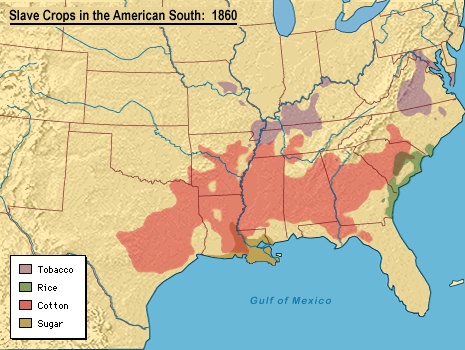
The South- to be honest it is a region that's borders are hard to define in the present but, if we're talking the 19th Century (and we are), The South would be any State or Territory that permitted Slavery. The South had an active role in American politics. Andrew Jackson, for example, was from The South. He was a Tennessee plantation owner. In fact all but very few Presidents before Abraham Lincoln were from The South, had ties to The South or were known to sympathize with The South. The region had a large voting block in Congress and spent considerable amounts of time trying to expand their borders West: Alabama, Mississippi, Louisiana,Texas, Missouri, Bleeding Kansas, the list goes on.

But what about words? The South was actually quite proud of their lack of public schools. Publishing houses were in the North East. What word did they change? Slavery, of course! It was their favorite thing after all. Slavery was a peculiar institution, the Southern way of life, labor, and Christian among other things. The most genius word switcheroo: Slavery = States Rights. Calling the involuntary servitude and degradation of an entire race becomes much more palatable when called States Rights. It doesn't even sound like it has to do with slaves at all. This clever term actually denoted the rights of white men more clearly than the term slavery. It was a genius switch that managed to keep abolition off of the National Conscious until approximately 1850.

Case #3:
The Greatest Generation- those that survived the Great Depression, fought and won WWII, and made lots of babies in the late '40s and 1950s. Now, to be fair, this generation of people accomplished quite a bit. Their task was monumental and very important. Their sacrifices were many. Their progress in race relations was notable. Of course, so was their intense racism:


And don't forget the war effort.

In their case the words they used synonymously must not have looked as egregious as they do now. But, that was the case for both Andy Jackson and The South, so I don't plan on letting them off the hook. For them America = Democracy, Freedom, Liberty, Equality. They weren't the first to make this switch. No, they were just one of many generations to do so. The particularly egregious part here is that this generation produced and defeated Hitler yet wouldn't allow African Americans to eat lunch next to whites.

So words are important to us in the same way they were important to those who went before. Oliver is on to something. If only we'd look back a generation or two. Then maybe we'd have seen the latest turns of phrase and definition reassignment coming.

Wednesday, October 17, 2007

Everyone Loves a Makeover

Who doesn't love a makeover? The makeup, the wardrobe, the ugly duckling turned swan, are all part of being American, right? I mean isn't rags-to-riches the national dream? I mean if you just work hard you can be on Cribs one day talking about your 38 flat screen TVs, your sports cars and, lets not forget, your stainless steel fridge full of Crystal. And for those who work hard and experience inexplicable misfortune despite saintlike lives dedicated to service despite life's hard knocks...there's Extreme Makeover: Home Edition!

The last episode I caught featured the Brown family. Mrs. Brown, the head of the featured family, was anything but the "welfare queen" stereotype often applied to black women who live in government housing projects. Despite the odds she became a homeowner as a single mother with three children. Mrs. Brown also leads and participates in various grassroots community improving organizations. She, like many of the program's participants, deserved a break. The show's team of designers lead by Ty Pennington, of Trading Spaces fame, though a bit naive and socially unconscious, genuinely seem to want to help the featured families. And only the Grinch or Scrooge or some storybook villain could deny the families some help. One gets the impression that the communities that rally to join the show's efforts are doing the right thing by their less fortunate community members. In the case of Mrs. Brown and the Brown Family the community thus far had rewarded them with looting and a deadly fire as thanks. (For their complete story: click here.) Enter Ty and cannons. Yes, that's right, in the Constitution State (Conecticut) they demolish run down houses with Revolutionary cannons. Boom. America. Boom.

The Brown Home: Before (Top) and After (Bottom)


True, the use of cannons begs a question or two. What interests me are the questions that the show neglects to ask. Here's a whole list of them:

Why was home ownership so difficult a goal to archive for the Brown family?

How did their home flood and why weren't they able to recover their losses?

During the deadly fire-- where was the fire department? Why did Mrs. Brown have to rely on her son to rescue her from the blaze?

Why was another rundown apartment their only choice?

Why is it that a windfall reality TV show was their only hope at ever archiving a better quality of life no matter how hard they worked?

Also, what about everyone else still housed in the projects?

Maybe the answer is simple: the Brown family is a brown family. That fact isn't easy to miss. The show had no problem showcasing their...um..."blackness". They got dance lessons as a special treat, after all. And really who can forget the gospel choir visit to Sears to shop with the ever hyperactive Ty. Ahhh, TVland- where the caricatures are black and the blacks are invisible. So as not to provide a serious critique of the systems in place that make the odds of a woman like Mrs. Brown succeeding in providing even basic securities for her family, the show highlights community activism and do-it-yourself/ up-by-your- bootstraps triteness.

If the show addressed even one of the above questions it may actually inspire real change. Instead it reinforces the idea that the burden is on the individual donor/citizen. Yet, someone as hard working and good hearted as Mrs. Brown had no hope short of an extravagant hyperactive reality show.

Talking to History

This morning I noticed a headline in relation to tv news personality, Don Imus. Famous for outrageous commentary on sports that involved slurs of all kinds, Imus was recently the source of controversy surrounding some racist name calling on his part in regard to the rise of Rutger's University's Women's Basketball team and their performance in the NCAA Women's Basketball Final. Imus, months after the turmoil, seems to have found new employment broadcasting on a new station.

Seeing this tidbit of news made me wonder two things: a) how is it that Imus is working again? and b) "shock jocks aside" what does it take for Americans to talk about race seriously?

It seems that the issue will never go away or fade away or be anywhere but bubbling under the surface of a host of American concerns: the War on Terror, Education, Heath Care, Immigration, the Economy, and the current situation in the Gulf Coast. But, how is the issue coded? In all honesty most Americans would probably describe racism and racist thoughts as personal and individual problems. Racism, for many, is seen as a set of personal prejudices. What remains un-confronted are instances of institutional racism. The ideology of race, an essentially made up marker, is alive and well despite public outrage at the mutterings of tv personalities.

In a recent review of the National Museum of African American History and Culture's web launch speaks to the real conversation American's are having with race. The NMAAHC is slated to open its doors in Washington, D.C. in 2015. But, as a recent critic noted, the opening is being foreshadowed by a recent "web opening", an opening that exposes some of the problems the physical museum must face. How can a story so painful and so complex ever be told by public historians? For that matter, how is it that African-Americans ended up with a separate museum to begin with? As the Times' critic notes, African American History is American History. The two are inseparable, slavery made sure of that. Unlike the museum dedicated to American Indians on the National Mall, this museum will be a History and Culture museum.

The answer is of course that the text book histories that most Americans grew up on were populated mostly by white men. When mom & pop arrive in D.C. on a fabulous Americana Deluxe vacation complete with a night time trolley tour of all the famous monuments, they'd like to visit Judy Garland's slippers, the first ladies' dresses, and Abe Lincoln's stove pipe hat. A nice progressive narrative that includes words like freedom, justice, stars and, of course, stripes goes really well with a trip to Mount Vernon in NoVa or, even, Ford's Theatre. Slavery, Reconstruction, Jim Crow and the violence of the Civil Rights Movement...well, its a toss up between that and the Holocaust Museum or maybe that place where you can eat a buffalo burger and look at Indians' stuff. I mean, at least with those two museums the suffering is removed from the American national conscious (ahem, Japanese Internment circa WWII anyone?) or pertains to people that most Americans don't think exist anymore (all the Indians are dead, right?). But Black people do exist. Though about 14% of the population their mere presence has complicated Americaness for along time, just ask Thomas Jefferson. If the museum deals candidly with the history it presents what's next? Reparations?

Americans are given the opportunity to confront their own history every day. They don't have to wait for someone like Imus to slip up or forget that his viewing audience is "mixed company". Recent headlines from New Brunswick, NJ to Jena, LA; from Iraq to Mexico; from the 2004 election to the current dash to the White House have provided ample opportunity. Of course the language used is that of criminality or citizenship or terror. So, you know, even if it walks like a racist and talks like a racist if it uses the words of crime and punishment then, well, kids should be tried as adults...for example.

That, dear reader, is what this blog is about. The past is linked to the present. The issues that make the founding of the NMAAHC sticky translate in to the reality of experience for all of us. I'd just like to point out how close to the past we're inching. Is it 2007 or 1907? Or maybe 1707?