| 1. | a unit of language, consisting of one or more spoken sounds or their written representation, that functions as a principal carrier of meaning. Words are composed of one or more morphemes and are either the smallest units susceptible of independent use or consist of two or three such units combined under certain linking conditions, as with the loss of primary accent that distinguishes blackʹbirdʹ from blackʹ birdʹ. Words are usually separated by spaces in writing, and are distinguished phonologically, as by accent, in many languages. |
Don't worry, Dear Reader, I've not devolved into the deft stylings of an undergraduate term paper. No, I'm serious about this. In fact I'll even add a slang definition:
word (wurd)- noun
1. An Africa American colloquialism that expresses agreement.
2. An exclamation that denotes that the truth is being spoken.
Today I want to talk about words in the spirit of this Daily Show segment:
You see, what Oliver is talking about isn't anything new at all. In fact, changing words has been the business of government for a long time. In the case of the U.S. government, well, it is serious business. Since I promised you some history on this blog, let's take a look back.
Case #1:
 Andrew Jackson- the guy on the twenty dollar bill, father of modern democracy, and inventor of American politics. That's right Old Hickory gave us the gift of universal suffrage. Okay, universal white male suffrage. He marched his Tennessee Volunteers off to do battle against forces that threatened America's security in the Creek War. He defended the U.S. against the evil British in the War of 1812. He occupied the White House despite various ailments and injuries as a true Scotch Irishmen.
His contribution to defining our term: Indian Removal = National Security. Did I mention that he's the guy that was responsible for the Trail of Tears? The logic: Indians didn't like Americans for some reason. They could very well side with the French or Spanish or British at anytime to threaten America's borders. They needed to be removed for reasons of national security. See how easy that was?
Case #2:
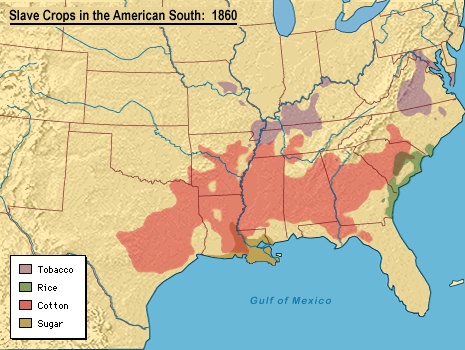 The South- to be honest it is a region that's borders are hard to define in the present but, if we're talking the 19th Century (and we are), The South would be any State or Territory that permitted Slavery. The South had an active role in American politics. Andrew Jackson, for example, was from The South. He was a Tennessee plantation owner. In fact all but very few Presidents before Abraham Lincoln were from The South, had ties to The South or were known to sympathize with The South. The region had a large voting block in Congress and spent considerable amounts of time trying to expand their borders West: Alabama, Mississippi, Louisiana,Texas, Missouri, Bleeding Kansas, the list goes on.
But what about words? The South was actually quite proud of their lack of public schools. Publishing houses were in the North East. What word did they change? Slavery, of course! It was their favorite thing after all. Slavery was a peculiar institution, the Southern way of life, labor, and Christian among other things. The most genius word switcheroo: Slavery = States Rights. Calling the involuntary servitude and degradation of an entire race becomes much more palatable when called States Rights. It doesn't even sound like it has to do with slaves at all. This clever term actually denoted the rights of white men more clearly than the term slavery. It was a genius switch that managed to keep abolition off of the National Conscious until approximately 1850.
Case #3:

The Greatest Generation- those that survived the Great Depression, fought and won WWII, and made lots of babies in the late '40s and 1950s. Now, to be fair, this generation of people accomplished quite a bit. Their task was monumental and very important. Their sacrifices were many. Their progress in race relations was notable. Of course, so was their intense racism:
And don't forget the war effort.
In their case the words they used synonymously must not have looked as egregious as they do now. But, that was the case for both Andy Jackson and The South, so I don't plan on letting them off the hook. For them America = Democracy, Freedom, Liberty, Equality. They weren't the first to make this switch. No, they were just one of many generations to do so. The particularly egregious part here is that this generation produced and defeated Hitler yet wouldn't allow African Americans to eat lunch next to whites.
So words are important to us in the same way they were important to those who went before. Oliver is on to something. If only we'd look back a generation or two. Then maybe we'd have seen the latest turns of phrase and definition reassignment coming.


No comments:
Post a Comment